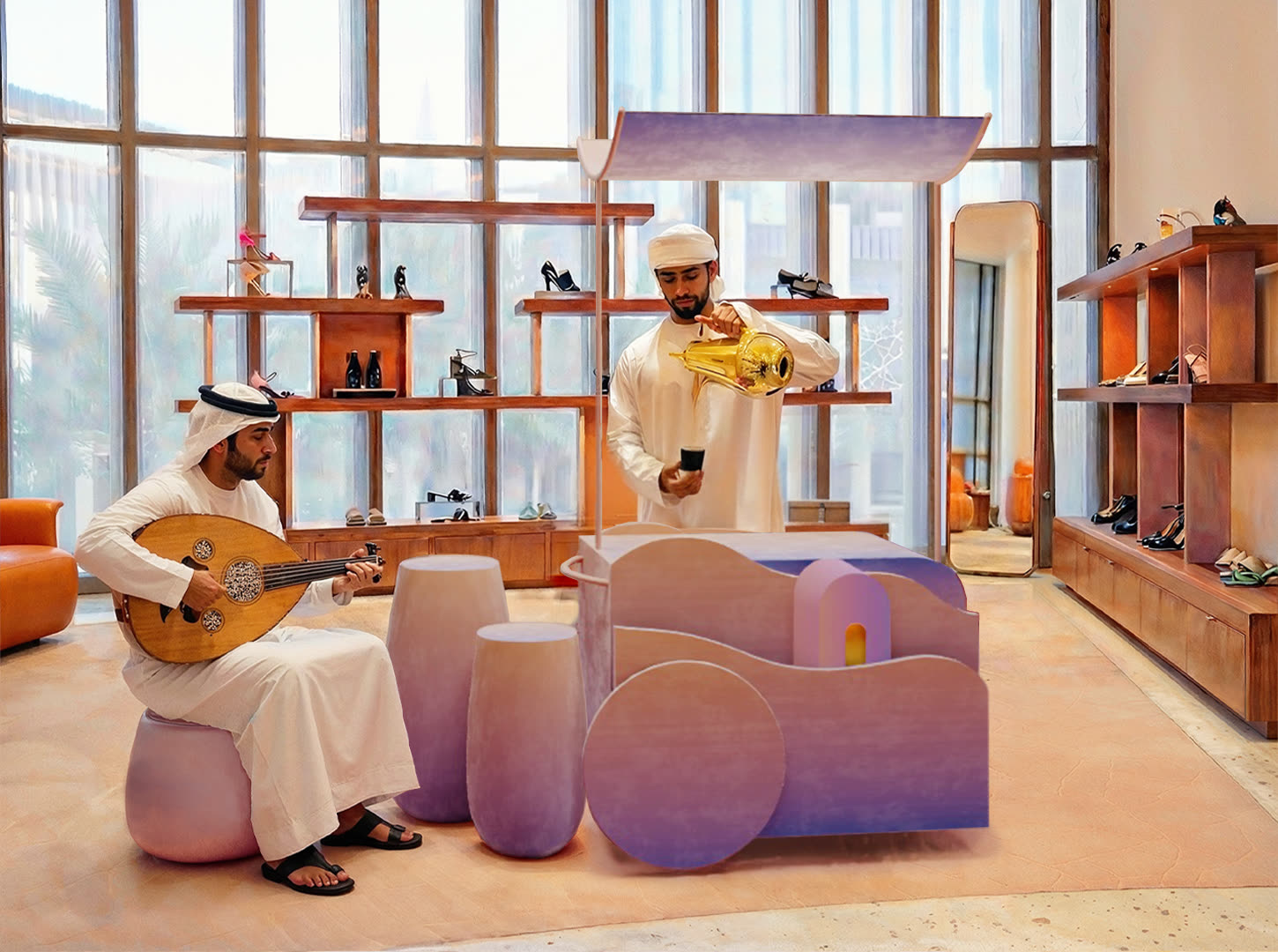
Ramadan activations fail when they treat the month as a visual theme — crescent, lantern, gold, done. A majlis is not a motif; it is the place where people are received, sit together and are fed. For a brand, the design task is hospitality before spectacle: make a room that lets the ritual happen comfortably, then let the brand be felt through warmth rather than logos.
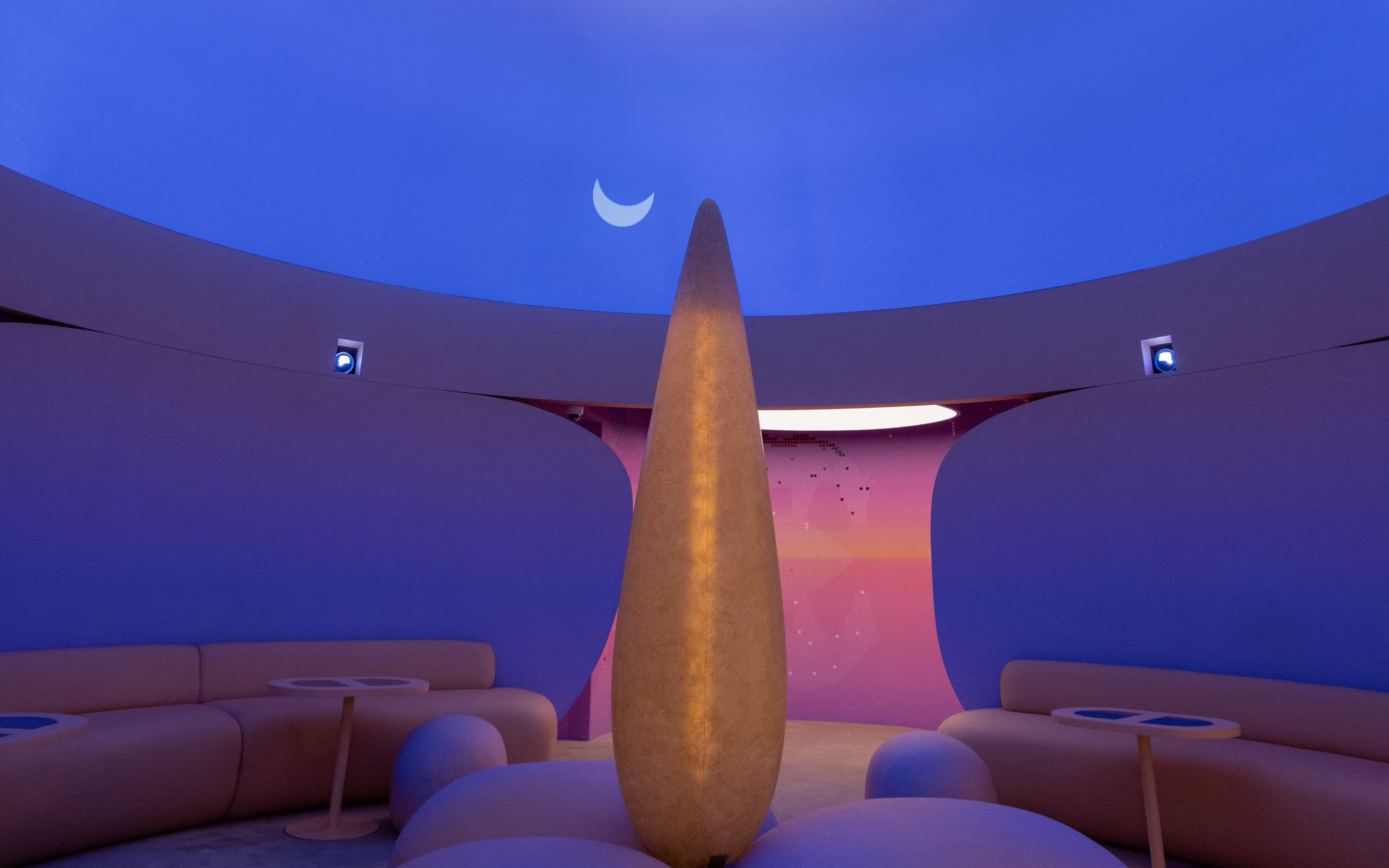
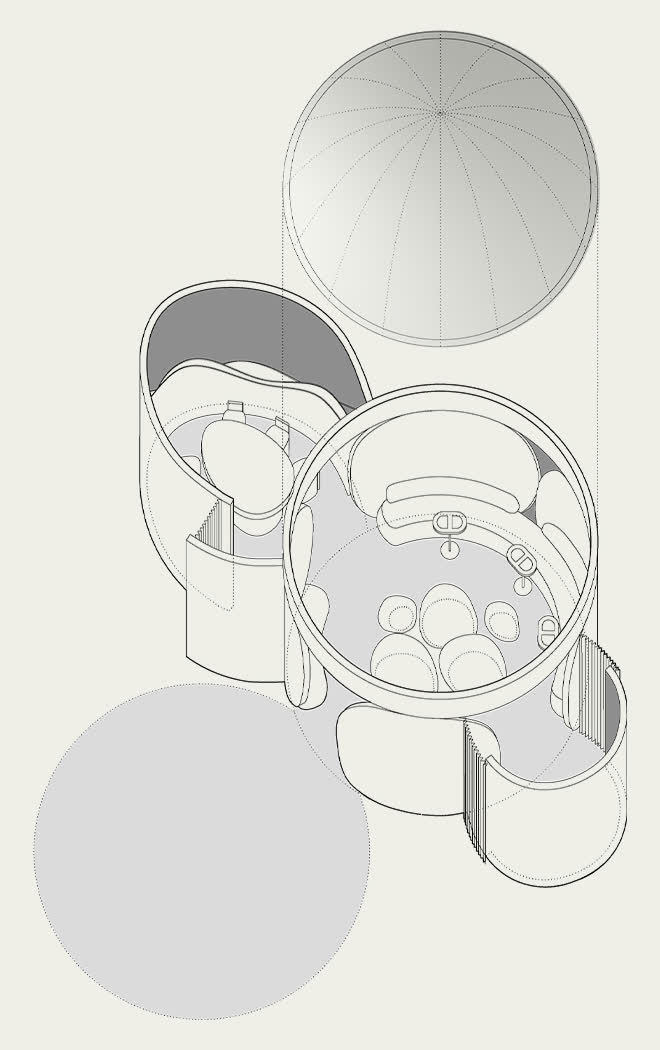
Our Dubai Mall Ramadan Majlis began with that distinction. A French luxury maison asked us to reimagine the traditional space of welcome inside its flagship. We built a sequence of circular lounge rooms in lilac and dune tones, with low gathering tables and totem lanterns, so the guest moves from the brightness of retail into the slower tempo of an iftar gathering.
That is also the commercial answer. A visitor who is seated, served and unhurried spends longer with the brand — and remembers who hosted them.
Design the ritual before the render
Circulation is the first decision. Arrival should feel like a threshold, not a funnel; servers need clear paths between tables; guests need places to put a tray, a phone, a cup. Then come light and sound. We used a projected night sky to turn the central dome into the room's heart — a hand-drawn Pegasus drifting past a crescent moon — rather than another illuminated product wall. Tea rituals and oud performances supply the pace. The technology disappears into the hospitality.
Materials follow the same rule: soft touch, low glare, nothing that fights conversation. The temptation in Ramadan retail is to amplify ornament until the room shouts. We prefer one strong atmospheric gesture and quiet furniture. If a guest cannot hear their companion, the scenography has failed.
Because we are architects, we model the room before we style it: sightlines from the entrance, seated eye levels, service clearances, the transition from mall light to majlis light. A beautiful iftar that cannot be operated is just a set.
From temporary installation to brand memory
Temporary work has to go in cleanly and come out without leaving a trace. We develop the concept in CGI, resolve the structure as a kit of parts, and plan installation around the mall's overnight window. That discipline is what lets a short-lived room feel intentional rather than improvised.
Content belongs inside the same process. Projection, guest photography and the installed documentation are planned as one deliverable, so the majlis keeps working after the room closes. Our brand activations practice treats the physical gathering and its digital afterlife as one brief.
See the installed rooms in the Ramadan Majlis case study, or how we approach exhibition design as complete temporary environments.